Vaisakhi · Khalsa Sājna Divas · Sikh community
What is Vaisakhi / Khalsa Sājna Divas?
Khalsa Sājna Divas commemorates Guru Gobind Singh Sahib's inauguration of the Khalsa at Anandpur Sahib during Vaisakhi in 1699. The day centers courage, equality, discipline, service, and shared commitment.
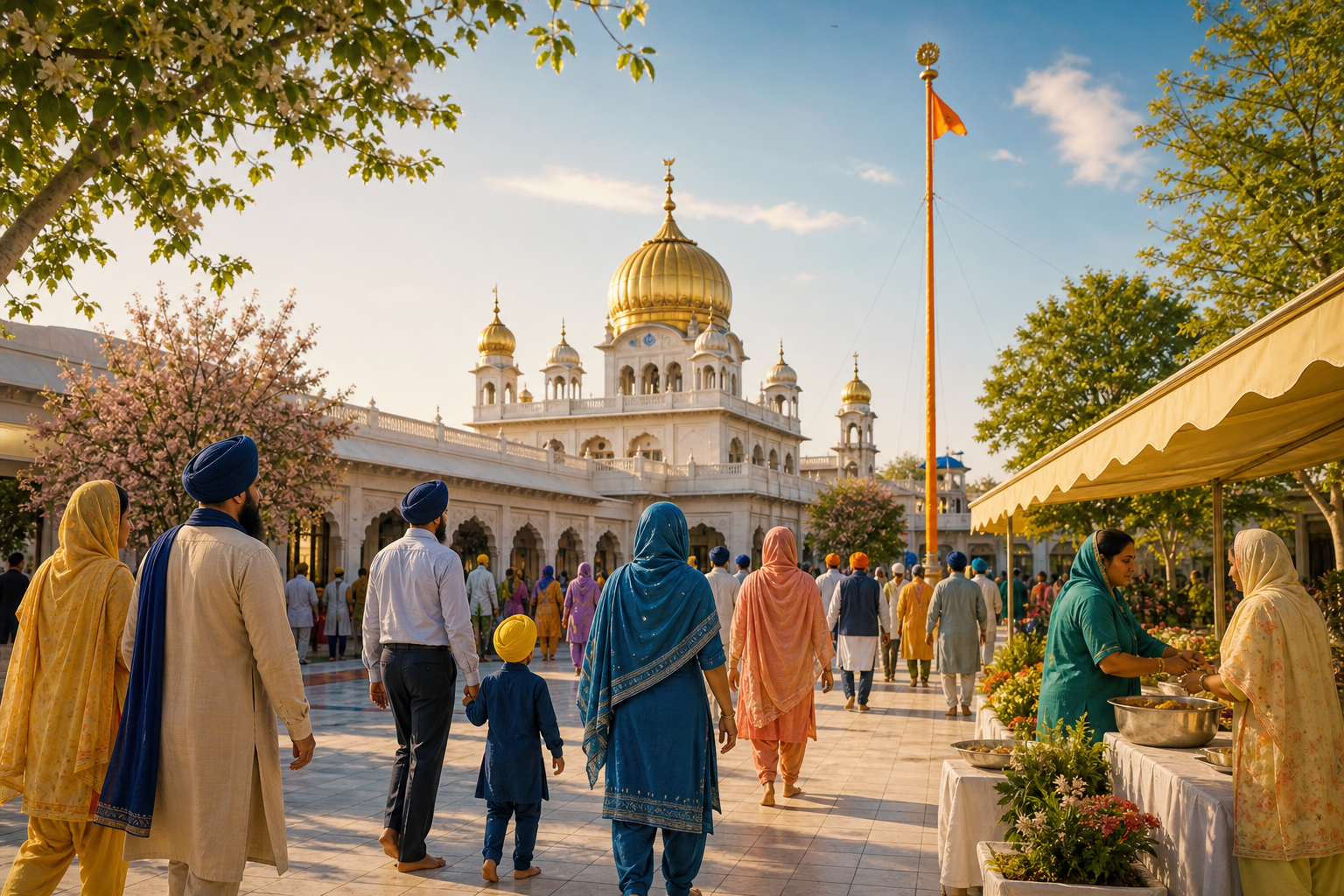
The Khalsa
The observance remembers a defining moment in Sikh history.
Guru Gobind Singh Sahib called the Vaisakhi gathering at Anandpur Sahib in 1699. The first Panj Pyare (Five Beloved Ones) received initiation and formed the nucleus of the Khalsa.
Communities may gather at gurdwaras for Gurbani kirtan (singing sacred Sikh hymns), ardas (community prayer), Amrit Sanchar (Khalsa initiation), seva (selfless service), langar (the free community meal), and Nagar Kirtan (a public devotional procession).
The calendar connection
Vaisakhi marks the opening of the solar month Vaisakh.
The Shiromani Gurdwara Parbandhak Committee identifies the observance as Khalsa Sājna Divas or Baisakhi. Sikh calendars and gurdwaras remain the authority for the observance date.
Open Pañcāṅga finds the repeatable solar boundary by calculating when the sidereal Sun enters Meṣa. This is the same boundary introduced in the solar-month lesson. Sikh calendars and gurdwaras remain the authority for the observance date.
Why it appears
The sky check finds the Vaisakh solar-month boundary.
The report shows Vaisakhi / Khalsa Sājna Divas when the calculated sidereal Sun enters Meṣa on the selected local date. The calculation repeats each year and retains the location, time zone, and named ayanāṃśa used for the result.
References: SGPC, Khalsa Sājna Divas / Baisakhi · SGPC, Guru Gobind Singh Sahib and the Khalsa