Śivarātri · the night of Śiva
Śivarātri
Śiva is a major Hindu deity whose names and forms carry many theological meanings. Rātri means night. People may observe Śivarātri through fasting, night vigil, prayer, mantra recitation, worship of Śiva, or other practices according to their tradition and circumstances.
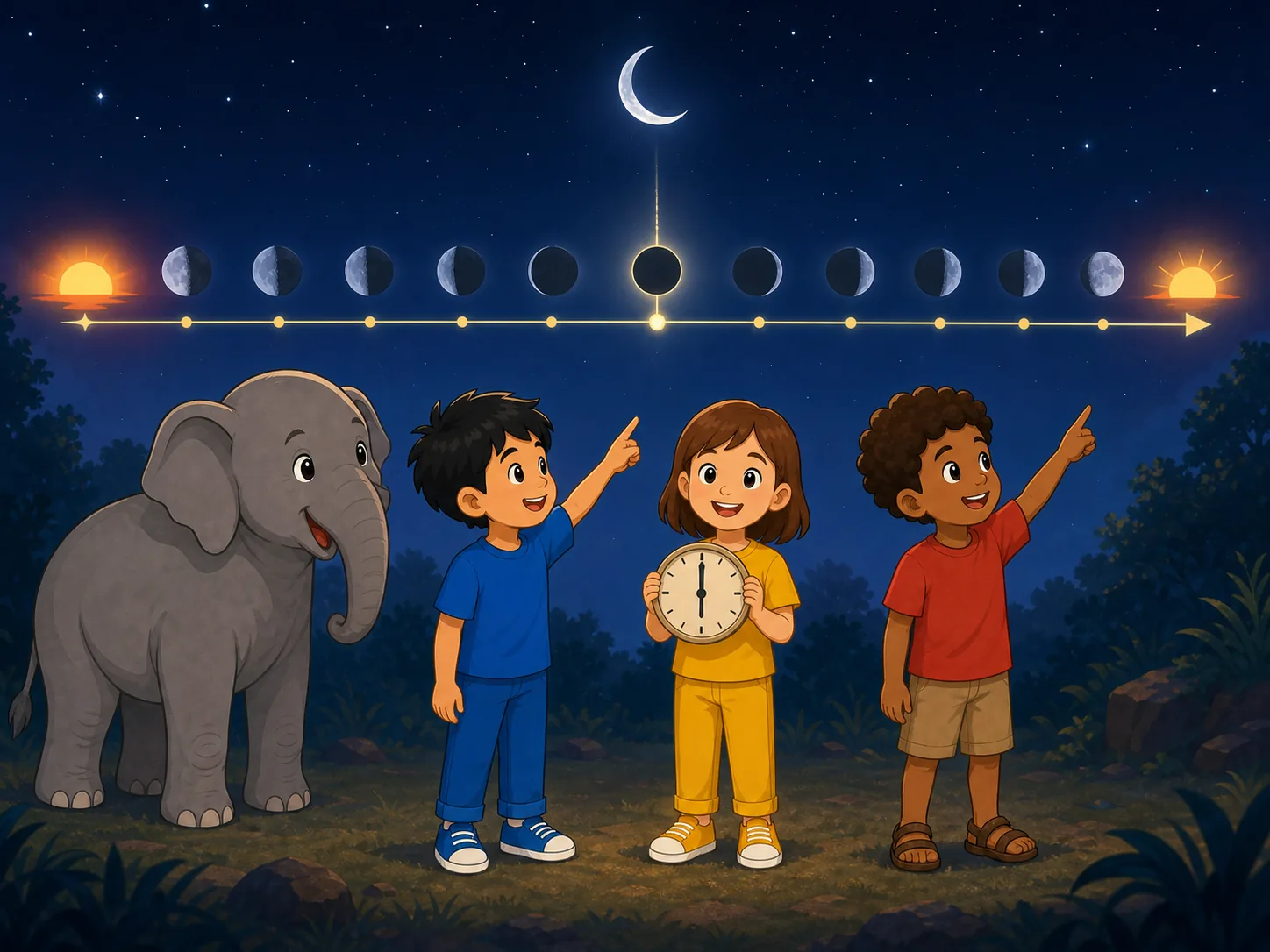
The lunar day and time of night
Kṛṣṇa Caturdaśī is checked at the middle of the night.
Kṛṣṇa Caturdaśī is the fourteenth tithi—the fourteenth lunar day—in the dark, waning half of the lunar month. It covers Moon–Sun elongations from 336 to 348 degrees and comes just before Amāvāsyā, the lunar day that ends at astronomical New Moon.
Niśītha means the middle of the night. For this calculation, it is represented by the midpoint between local sunset and the next sunrise, which varies with place and date. If Kṛṣṇa Caturdaśī prevails at that calculated moment, the result identifies Māsa Śivarātri for the evening on which that night begins.
Because the observance continues after midnight, the display gives a range such as “night of August 10–11” to show the complete night clearly.
Monthly and annual names
Monthly Śivarātri and the major annual Śivarātri
The recurring monthly night associated with Kṛṣṇa Caturdaśī at niśītha.
The major annual Śivarātri. Identifying it requires the relevant lunar month as well as the nighttime Caturdaśī condition.
Calendars may divide the night differently, or may use different month names. For that reason, their dates or labels may vary. The same annual Śivarātri night may be called Māgha in an amānta (new-moon-ending) calendar and Phālguna in a pūrṇimānta (full-moon-ending) calendar. The names differ because the two calendar systems begin and end their lunar months at different points.