One sky, many pañcāṅgas
Why pañcāṅgas may disagree
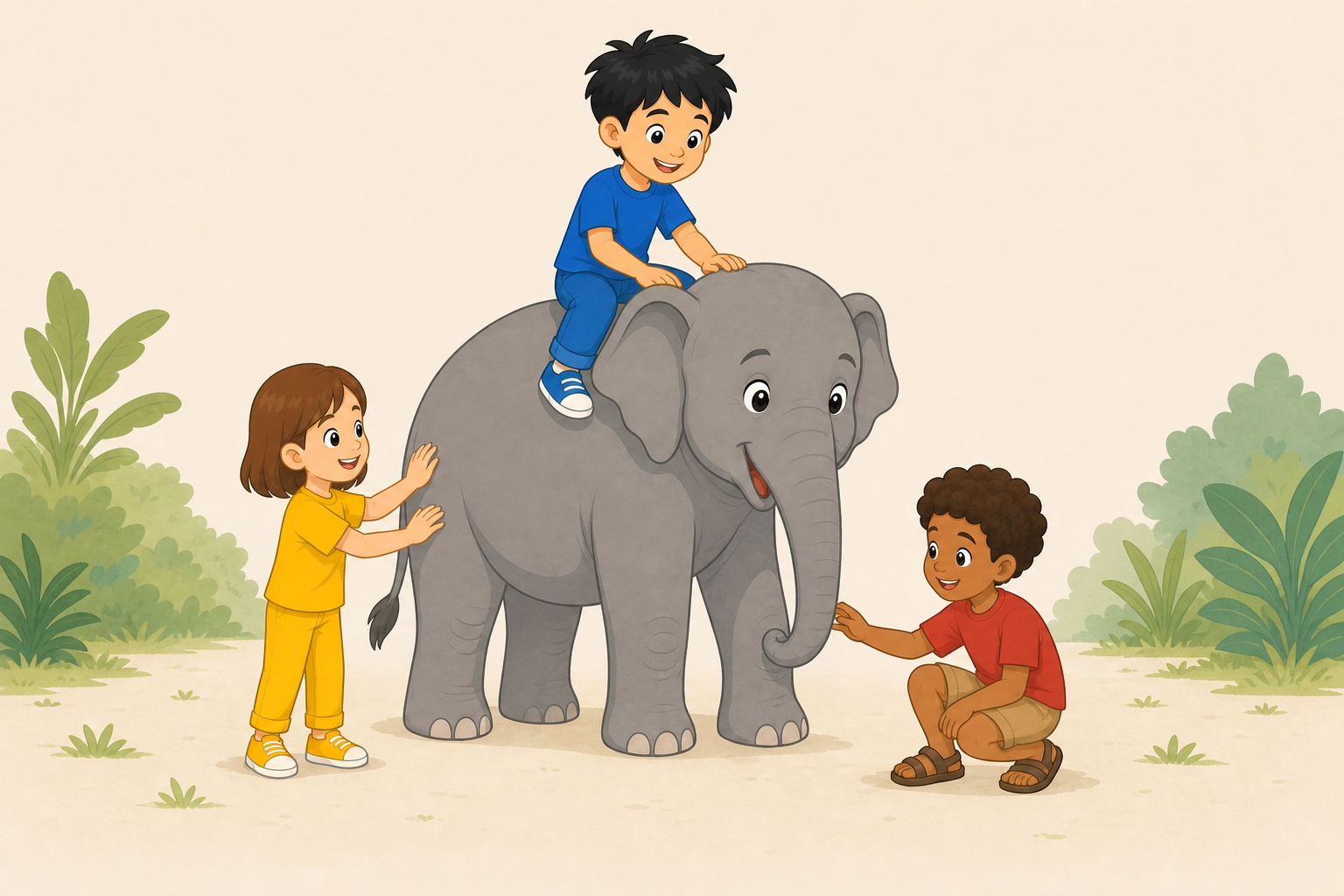
The familiar elephant story offers a useful analogy: people see the same elephant from different sides and describe different features. Pañcāṅgas begin with the same Sun, Moon, and sky, but may ask different calendar questions or apply different documented conventions.
Seven questions to ask when two results differ
Sunrise, sunset, moonrise, and the local civil date depend on coordinates and time zone.
The ephemeris, coordinate model, atmospheric assumptions, and numerical precision should be named.
Sidereal classifications require a documented zero-point convention. What is ayanāṃśa? →
A tithi is a moving lunar interval; many calendars connect it to a day through sunrise. What is a tithi? →
An observance may check sunrise, moonrise, madhyāhna, aparāhṇa, pradoṣa, or niśītha. Six controlling times →
Amānta and pūrṇimānta calendars place the month boundary differently, so the same lunation can be described with different month names.
Traditions may use different times or ways of choosing between overlapping tithis while sharing the same astronomical data.
How the layers relate
Astronomical events and religious observances occupy related, distinct layers.
An exact Full Moon or New Moon is an astronomical instant. Pūrṇimā and Amāvāsyā are tithi intervals. A religious observance uses a documented rule to connect a calendar condition with a local date. A community gathering may then be scheduled for another practical time. Open Pañcāṅga labels those layers rather than combining them into one unexplained date.
Scientific guardrail
Accurate results require sound inputs, rules, and documentation.
A calculation can still be wrong, stale, or undocumented. The elephant analogy means that a difference should first be traced to its location, astronomical model, calendar convention, or observance rule before it is declared an error. Reproducible inputs and named, sourced rules make that comparison possible.