Amānta · pūrṇimānta · two boundaries around one cycle
What do amānta and pūrṇimānta mean?
An amānta month ends with Amāvāsyā. A pūrṇimānta month ends with Pūrṇimā. Each new month begins immediately after its named ending boundary.
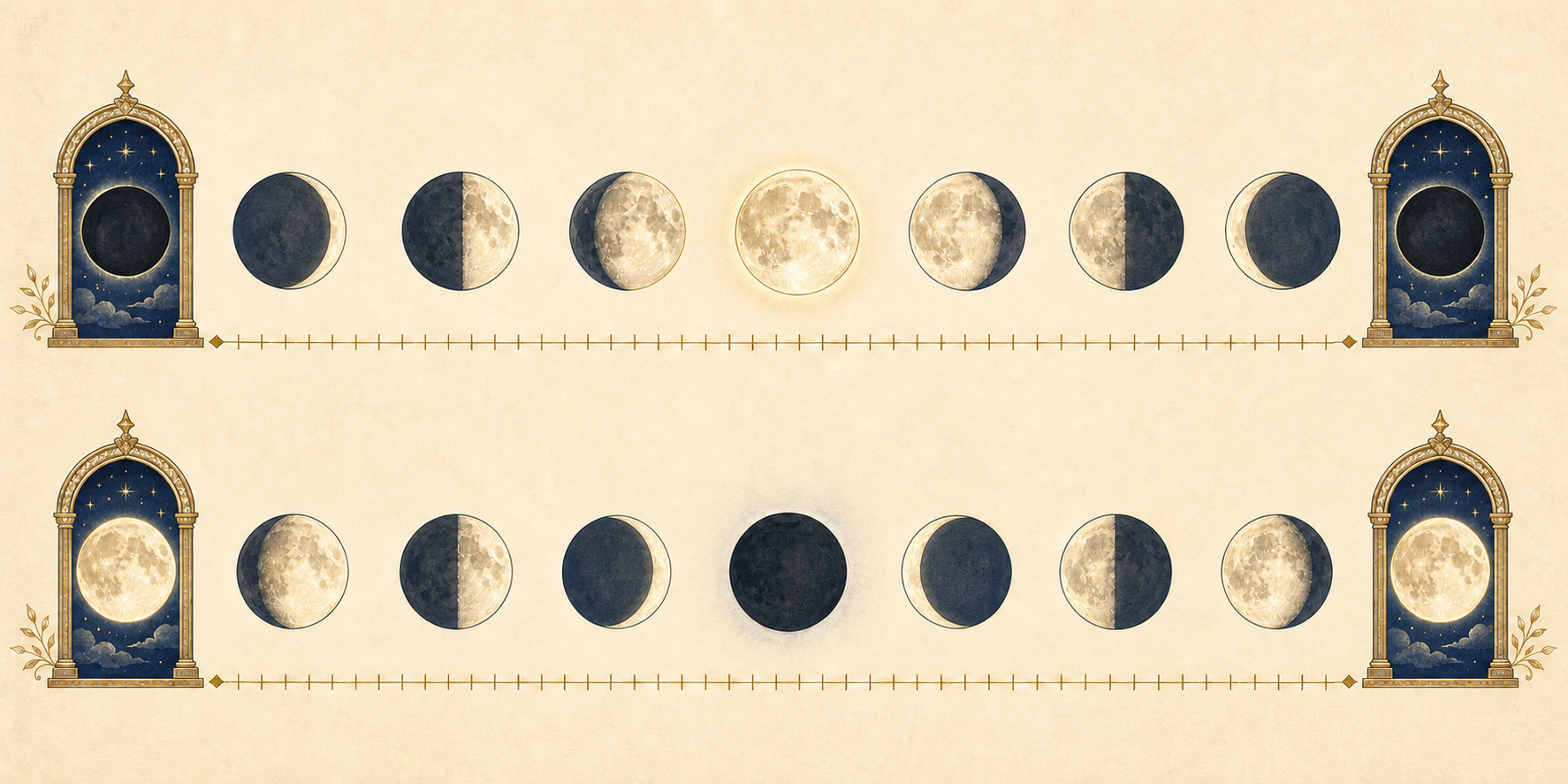
Where each month begins and ends
Each system uses a different lunar-phase boundary.
The Sanskrit word anta means “end.” The name identifies the phase that closes the month, and the two boundaries sit about half a lunation apart.
Why the named system matters
Being clear about which lunar-month system you are using is important.
The same tithi can receive different month labels because each system groups the waning fortnight with a different neighboring bright fortnight.
Open Pañcāṅga names the amānta method used for its general month display. It finds the New Moons surrounding the selected date and uses the sidereal solar ingress within that lunation to assign the ordinary month name. It also distinguishes a regular month from an adhika māsa, an additional lunar month.
A limited pūrṇimānta conversion supplies explicit month-opening markers. In the dark fortnight, it advances the safely calculated regular amānta name by one month, so the same tithi can mark the opening of the next pūrṇimānta month. The marker is reserved for regular months with a safely determined boundary.
This page presents one documented calendar convention. Hindu traditions and regions use several named systems, and each observance result identifies its choice for clear comparison with another pañcāṅga.
The same kind of complete lunar cycle
Both systems contain thirty tithis and average about 29.53 days.
The mean phase cycle is about 29.53059 Earth days.
A tithi is 12° of Moon–Sun angular separation, so its clock-time length varies. Individual months can therefore contain different numbers of clock hours or labeled civil dates while retaining the same thirty-tithi structure.
Astronomical references: NASA, Moon Phases and NASA GSFC, Eclipses and the Moon's Orbit. Calendar reference: Sewell and Śaṅkara Bālakṛṣṇa Dīkṣita, The Indian Calendar.