Jyotiṣa · light · astronomy · timekeeping
What is jyotiṣa?
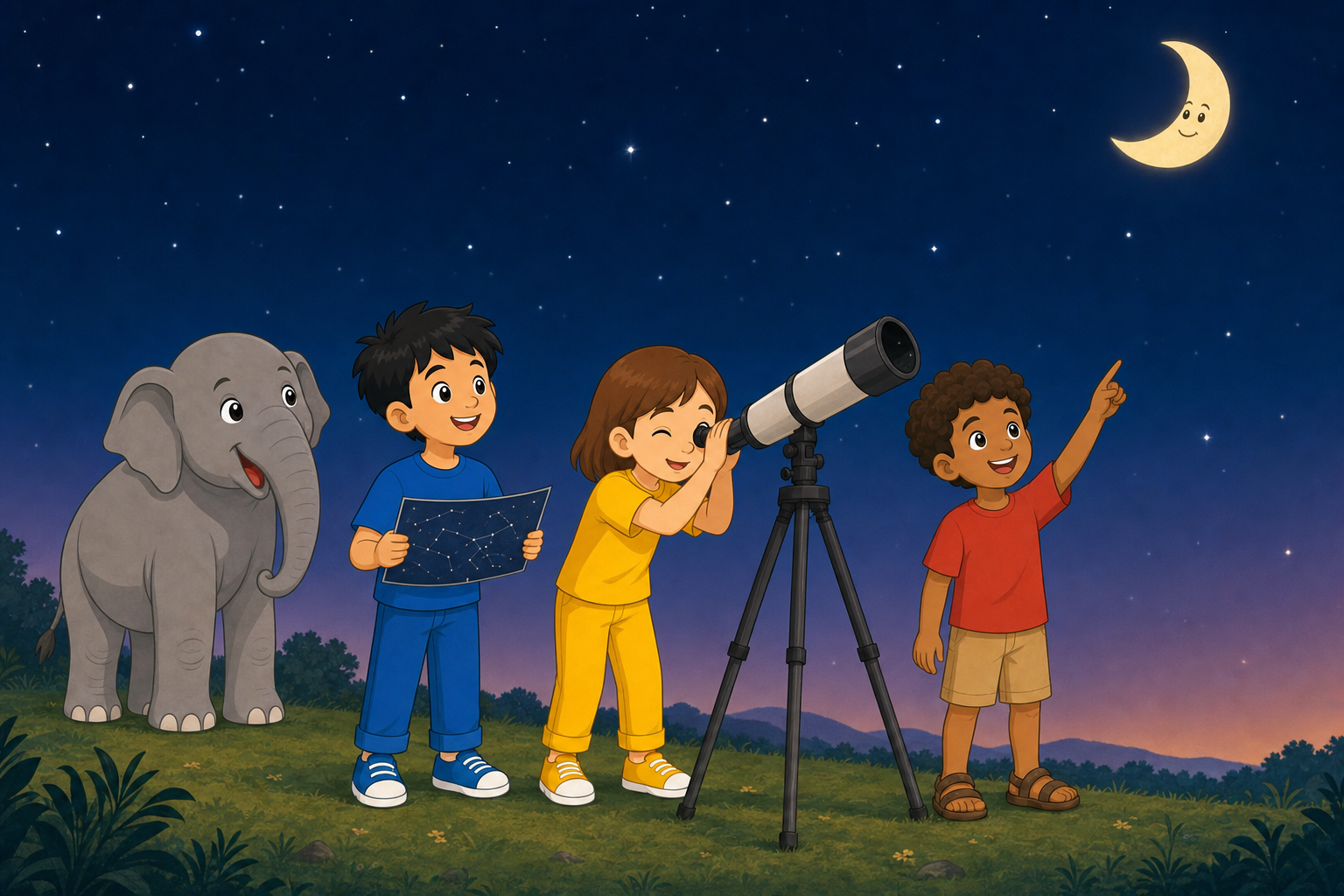
Look up. The Sun, Moon, planets, and stars have helped people measure time for thousands of years. Jyotiṣa is the Sanskrit discipline concerned with those heavenly lights, their movements, and the calendars and timings built from them.
The word and the idea
Jyotiṣa begins with jyotis: light or a heavenly light.
Light, radiance, or a heavenly body—the Sun, Moon, a planet, or a star seen as a light in the sky.
The discipline concerned with heavenly bodies, their movements, timekeeping, and calendar calculation. “The science of the lights in the sky” is a useful beginner's gloss.
The modern science that observes and explains celestial objects and the universe using measurement, mathematics, physical models, evidence, and repeatable tests.
Word reference: Monier-Williams Sanskrit–English Dictionary, jyotis
Jyotiṣa Vedāṅga
A Vedāṅga is a “limb of the Veda”—a supporting field of study.
Veda names the ancient body of sacred knowledge, while aṅga means a limb or part. The six Vedāṅgas support the careful study and use of the Vedas: pronunciation, ritual procedure, grammar, word explanation, poetic meter, and jyotiṣa.
Jyotiṣa Vedāṅga supplied the astronomical and calendrical knowledge needed to calculate days and times. Its work followed the Sun and Moon, counted cycles, and connected what could be observed in the sky with human schedules.
Government of India reference: Vedic Heritage Portal — Jyotiṣa · the six Vedāṅgas
The sky as a clock
The moving sky is one of humanity’s oldest clocks.
A shadow changes through the day. The Moon changes shape across a month. The Sun's rising and setting points shift with the seasons. Stars return in recognizable patterns. Long before mechanical clocks, people in many cultures watched these cycles to organize travel, farming, ceremonies, civic life, and religious observances.
Many civilizations share this human story. For example, the Smithsonian's Living Maya Time project explains how Maya observers combined astronomy and mathematics to build calendar systems. Other cultures developed their own careful ways of reading the same sky.
Cross-cultural example: Smithsonian National Museum of the American Indian — the Maya calendar system
Observation before interpretation
What can we observe, measure, calculate, and check?
Historical jyotiṣa is broader than the modern English word astronomy and, over time, has also included astrological and interpretive traditions. Open Pañcāṅga evaluates historical jyotiṣa claims separately from modern scientific evidence.
This project begins with the astronomical layer: where the Sun and Moon are, when they rise and set, how their angular relationship changes, and how a documented calendar method classifies those measurements. A scientific result should tell you what was observed, how it was calculated, which assumptions were used, and where uncertainty remains.
Light, position, motion, rising, setting, and repeating cycles.
Record where and when an observation occurs.
Use mathematics and a stated astronomical model.
Apply a documented calendar definition such as tithi.
Keep the evidence separate from a religious or cultural interpretation.
What do you want to be when you grow up?
Perhaps Prīti will grow up to become an astronaut.
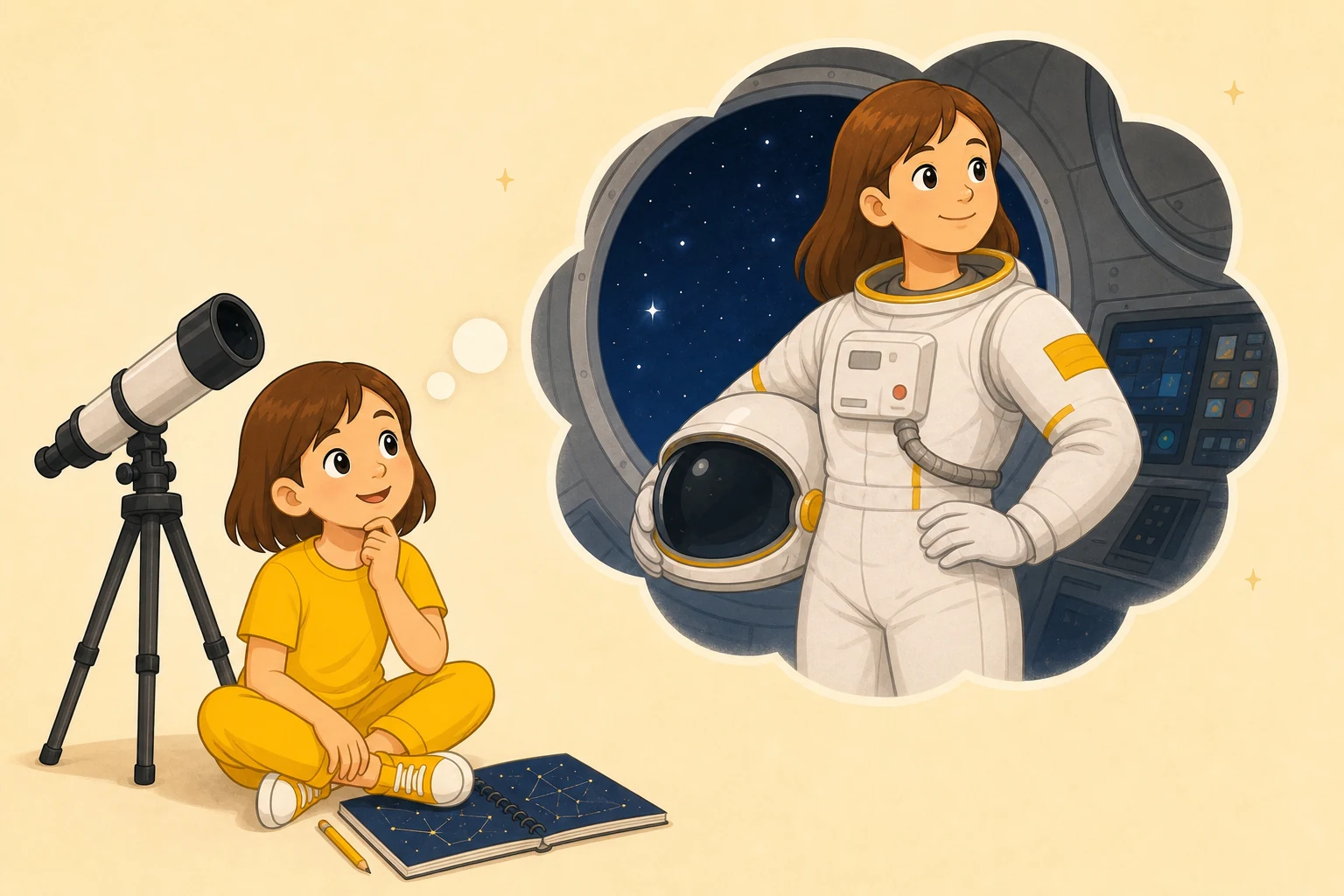
Astronomy also produces practical tools. Technologies developed for observing faint objects and exploring space contribute to imaging, precision optics, environmental monitoring, navigation, communication, and medical and industrial applications. Most importantly, astronomy teaches us to ask large questions—and then seek answers with evidence.
Explore further: NASA astronomy learning and student opportunities · International Astronomical Union — astronomy, education, and technology