Jain Dīpāvalī · liberation · light of knowledge
What is Mahāvīra Nirvāṇa Kalyāṇaka / Jain Dīpāvalī?
Mahāvīra Nirvāṇa Kalyāṇaka commemorates the complete liberation of Mahāvīra, the twenty-fourth Tīrthaṅkara, at Pāvāpurī. Nirvāṇa Kalyāṇaka means the auspicious event of liberation.
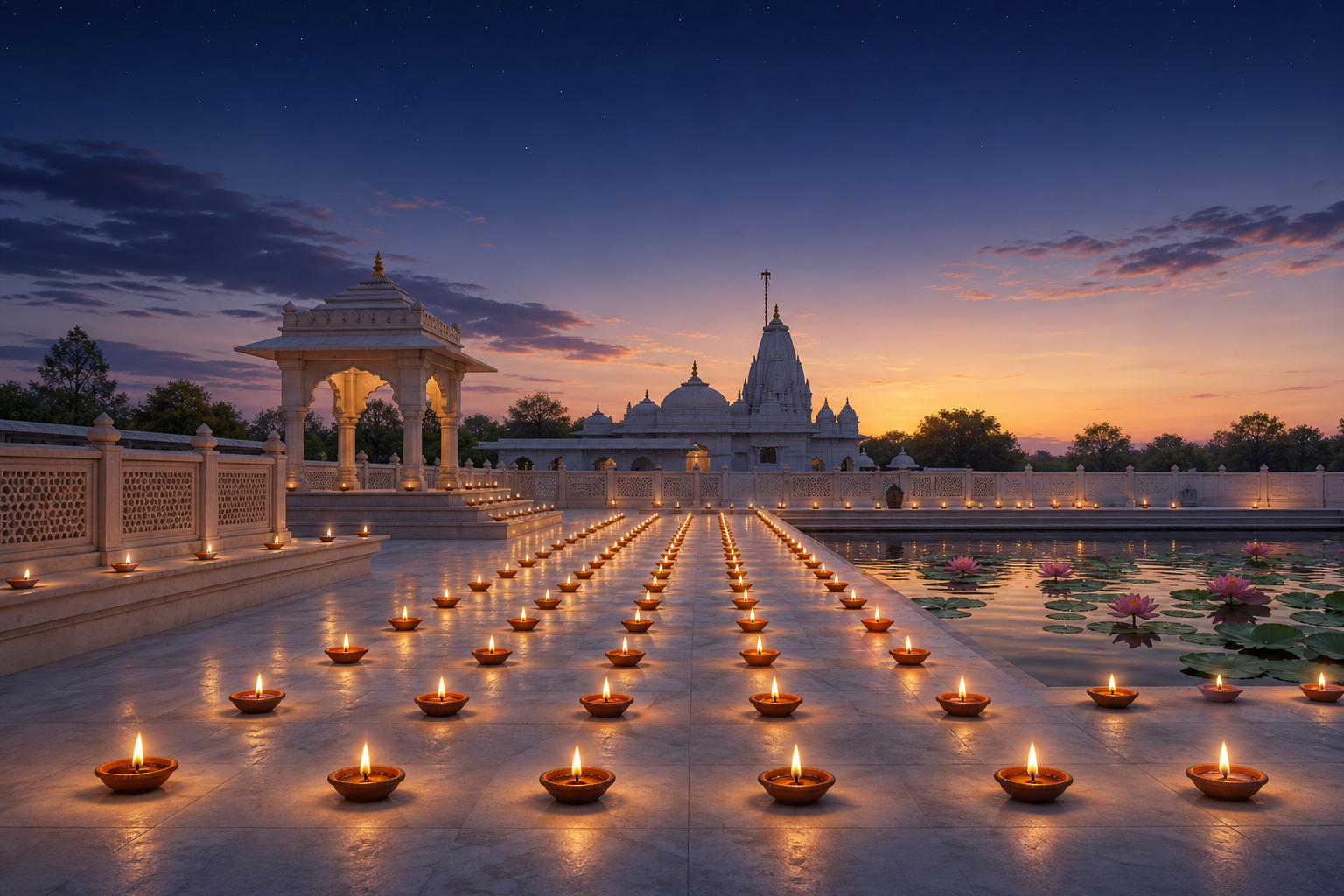
A Jain sacred observance
Jain Dīpāvalī honors Mahāvīra's nirvāṇa.
Nirvāṇa is complete release from rebirth and karmic bondage. Mahāvīra's teachings center ahiṃsā (nonviolence), truth, self-discipline, non-attachment, and the path to liberation.
Participation varies. Communities may visit a Jain temple, hear or recite teachings associated with Mahāvīra's final discourse, meditate, fast, give to others, and light lamps.
The light of knowledge
The lamps carry a specifically Jain meaning.
JAINA explains that people lit lamps after Mahāvīra's nirvāṇa to preserve the light of his knowledge. Jain Dīpāvalī therefore centers liberation, ethical practice, and inner illumination.
Why it appears
The sky check finds Āśvina Amāvāsyā at sunrise.
JAINA places Mahāvīra's nirvāṇa at the dawn of Amāvāsyā in Āśvina. Open Pañcāṅga shows the observance when Amāvāsyā is underway at local sunrise during regular amānta Āśvina.
Jain pañcāṅgas, temples, and community authorities remain the authority for observance dates and may apply additional conventions.
References: JAINA, Mahāvīra Nirvāṇa and Dīpāvalī · JAINA, Mahāvīra's life and teachings