Pitṛpakṣa · remembrance of ancestors · sixteen lunar phases
What is Pitṛpakṣa?
Pitṛpakṣa, also widely written Pitru Paksha or Pitra Paksha, is an annual Hindu period for remembering and honoring ancestors. Families and communities may observe it through remembrance, prayer, śrāddha, tarpaṇa, piṇḍadāna, charity, or other inherited practices. Participation and ritual responsibilities vary substantially.
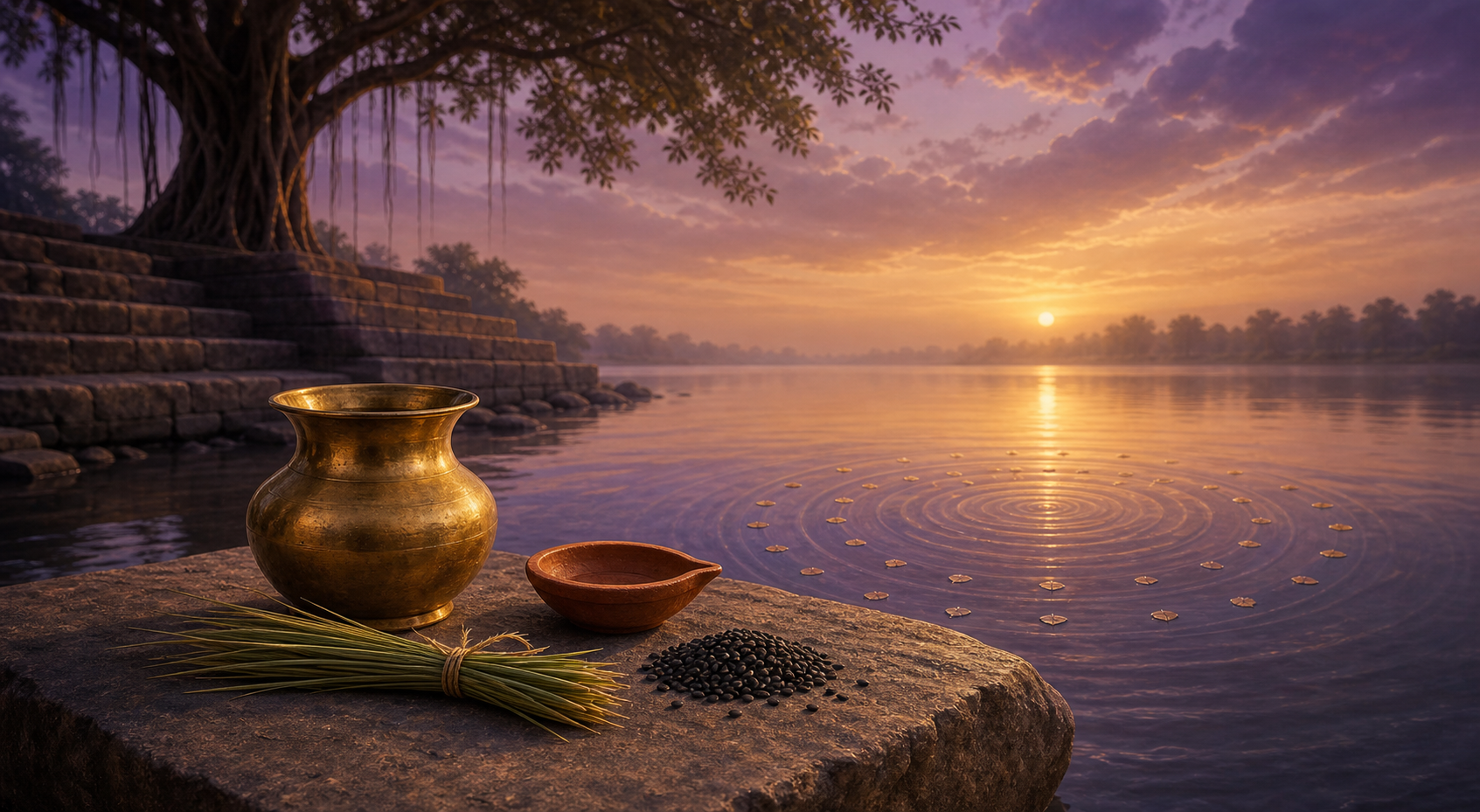
The name describes the period
Pitṛ means an ancestor; pakṣa is a lunar fortnight.
An ancestor or forebear; the plural pitaraḥ refers to ancestors.
One of the Moon–Sun cycle's bright or dark lunar fortnights.
Acts of remembrance and offering undertaken according to family and tradition.
Named forms of offering associated with ancestral remembrance in many traditions.
A period with many family observances
This guide follows sixteen lunar phases from Pūrṇimā to Amāvāsyā.
Official Bihar sources describe Pitṛpakṣa as a sixteen-day period. The rule used here counts an opening Pūrṇimā, followed by the fifteen tithis of Kṛṣṇa pakṣa, ending with Sarvapitṛ Amāvāsyā. Mahālayā is an important name and cultural setting for the closing day in some regions.
Families associate particular tithis with an ancestor's death or follow other inherited rules. Open Pañcāṅga identifies the broad calendar period, while each family and community determines its own rites.
Official references: Bihar Tourism, Pitrapaksha · Bihar State Tourism Development Corporation, Pitripaksha Mela
How Open Pañcāṅga identifies the active period
These rules show when Pitṛpakṣa is in progress.
The named amānta lunar-month calculation must give regular Bhādrapada. The report then checks the tithi at sūryodaya, local sunrise, beginning with Pūrṇimā and continuing through every Kṛṣṇa pakṣa tithi to Amāvāsyā. It names the matching phase and explains the local calculation.
This sunrise check identifies the broad period. Detailed śrāddha calendars may also examine aparāhṇa, the remembered death tithi, special precedence, or a different lunar-month convention. A kṣaya tithi can fall between sunrises, while a vṛddhi tithi can remain active at two sunrises, so sixteen lunar phases can occupy a different number of consecutive civil dates.