Project story · Sanskrit education
Why was Open Pañcāṅga created?
The project explores one question: can modern technology make a specialized Sanskrit vocabulary inviting, playful, scientifically grounded, and meaningful to young people and other new learners?
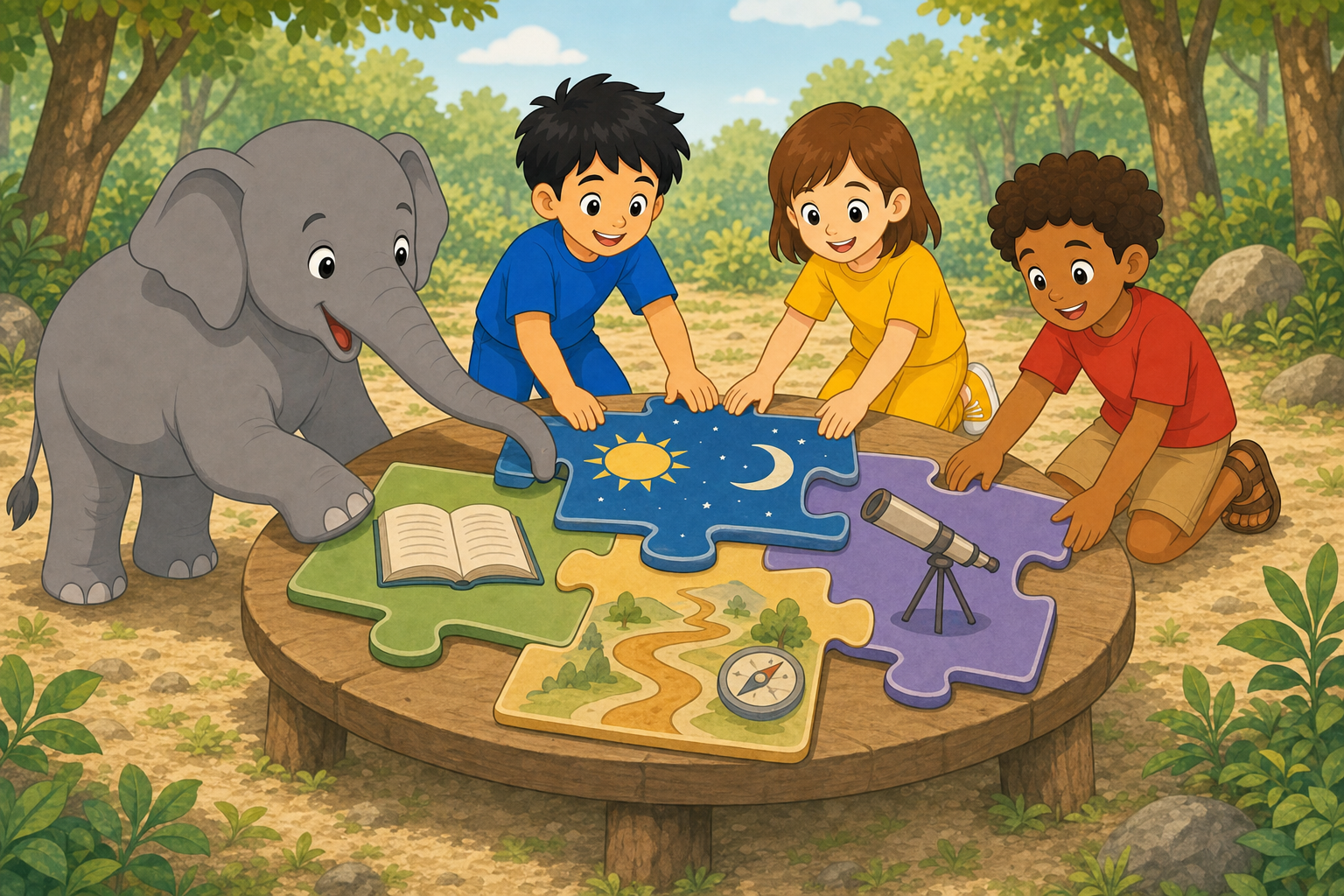
Interesting · experiential · relevant today
India’s National Education Policy helped inspire the experiment.
Section 4.17 of India's National Education Policy 2020 says Sanskrit should be “taught in ways that are interesting and experiential as well as contemporarily relevant.” Open Pañcāṅga uses illustrations, live scientific calculations, plain-English support, and learner-chosen trails to demonstrate one possible approach.
It is an independent project inspired by that educational model and has no sponsorship, affiliation, or endorsement from the Government of India or the Ministry of Education.
World Sanskrit Day
The public learning milestone joins the subject with the mission.
Open Pañcāṅga uses World Sanskrit Day as a public learning milestone. The annual observance falls on Śrāvaṇa Śukla Pūrṇimā, bringing together Sanskrit learning, a lunar-month name, a pakṣa, and the full-moon tithi.